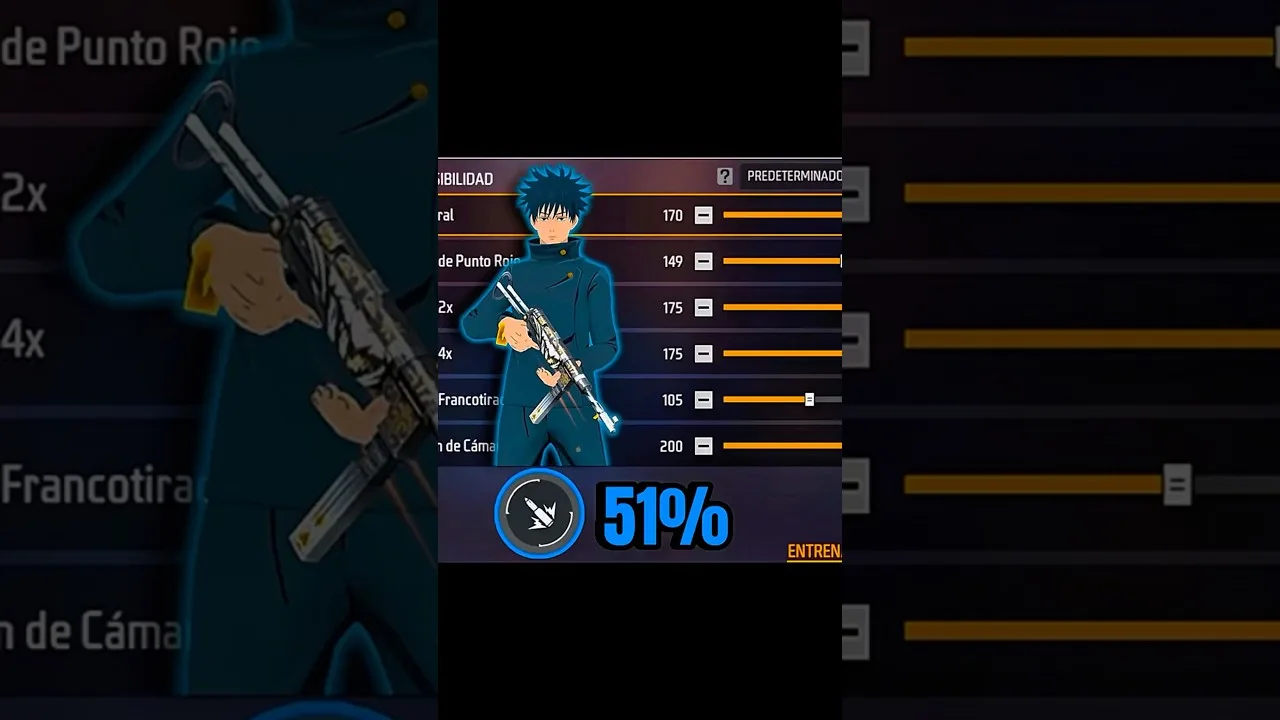
Camera sensitivity and ADS sensitivity control two different moments in a fight. Camera sensitivity governs how your view moves while you are looking around without firing through a scope, while ADS, meaning aim down sights, sensitivity governs how your aim moves once a red dot or scope is open and you are tracking a target.
Many players change both at once and then cannot tell which one helped. Open Sensibilidades APK for Android, write down your current camera and ADS values separately, and read the general sensitivity explained guide before touching either slider, because the general base underneath both values changes how each of them feels in practice.
What Camera Sensitivity Feels Like in a Match
Camera sensitivity shows itself when you scan a hillside, check windows while running, or turn toward a vehicle sound. If it is too low, scanning feels heavy and you spot threats late. If it is too high, your view darts around and you lose track of exactly where you were looking a second earlier, which costs time when a fight starts suddenly.
A useful test is to sprint across an open area in training and practise snapping your view between two fixed points, such as two crates. Your view should land on each point without repeated correction. Adjust the camera value until those snaps feel direct rather than floaty or twitchy, then leave it alone while you work on ADS.
What ADS Sensitivity Changes When You Scope In
ADS sensitivity takes over the moment your scope opens, and it decides how steadily you can follow a moving target while firing. Too high, and your spray climbs or skips past the opponent. Too low, and you cannot follow a player who strafes or jumps, so your shots land behind them even though your first aim was accurate.
Different scopes magnify differently, so a value that feels calm on a red dot can feel slow through a 4x scope. Test each magnification on the same moving target drill rather than assuming one ADS number fits all scopes. The Sensibilidades features guide shows which sections of the app group these values so you can review them in a sensible order.
Why the Two Values Should Not Match
Players often set camera and ADS to the same number expecting consistency, but the two jobs are different. Looking around benefits from speed, while firing benefits from steadiness. Most balanced setups therefore keep camera movement a little freer and ADS a little calmer, though the exact gap depends on your thumb speed and screen size.
If your unscoped turns feel right but your spray feels wild, only the ADS side needs work. If your aim is steady but you are always late to spot flanking players, only the camera side needs work. Naming the problem correctly is half the fix, and it stops you from rebuilding a setup that was mostly working.
A Simple Balancing Routine
Balance the two values in a fixed order over several short sessions. First set camera sensitivity using the snapping drill, then play a full match without changing anything. Next session, set ADS using a tracking drill on moving targets at red dot range, then a match again. Only after both feel individually right should you test them together in close and mid-range fights.
Record both values after each session along with one sentence about what improved. After a few days a clear pattern appears: you will know whether your misses come from spotting, tracking or recoil control, and each of those problems has a different slider as its answer.
Putting This Into Practice
Set aside one short session devoted only to the handover between free look and scoped aim. Do not chase wins during this session and do not judge the setup by the scoreboard at the end of it. Your only task is to repeat the same movements until they feel ordinary: spotting a target with camera movement, then holding it steady once the scope opens. When a movement starts to feel ordinary, that is useful information, because ordinary means your hands have stopped negotiating with the setting and have started trusting it. Write down what felt easier and what still felt awkward while the session is fresh, using plain words you will understand when you read the note again next week.
Next, carry the same focus into two or three normal matches without changing anything, even if the first match goes badly. A setup for the handover between free look and scoped aim has to survive different maps, different weapons and the small panic that arrives when a fight starts closer than expected. If it only works in a quiet training room, it is not finished yet, and the honest response is one small adjustment followed by the same test again, not a full rebuild. If it works across those matches, protect it: record the values, leave them alone for several days, and let repetition turn a good test result into dependable muscle memory you can rely on under pressure.
Finally, review the result at the end of the week rather than at the end of a single evening. Ask one simple question: did the handover between free look and scoped aim feel more predictable than it did seven days ago? Predictable is the right standard, because competitive aim is built on movements you can repeat when tired, rushed or surprised. If the answer is yes, keep the setup and move your attention to the next weakest part of your game. If the answer is no, change the one value most closely connected to the problem, by the smallest step you can feel, and repeat the weekly cycle with the same patience.
Final Thoughts
Camera and ADS sensitivity are partners, not twins. Give each one its own test, its own adjustment and its own match to prove itself, and the pair will feel balanced instead of fighting each other every time a fight changes range.
Keep changes small and separate, and your aim will become easier to read, easier to repeat and much easier to improve week after week.